
Table of Contents
- What Is Sciatica?
- What Does Sciatica Feel Like?
- What Causes Sciatica?
- How Is Sciatica Diagnosed?
- Can a Chiropractor Help With Sciatica Pain?
- How Can a Chiropractor Help With Sciatica?
- What Is Spinal Decompression?
- Does Spinal Decompression Help Sciatica?
- Does Spinal Decompression Work?
- Is Spinal Decompression Safe?
- How to Relieve Sciatica Pain at Home
- How to Sleep With Sciatica
- How Long Does Sciatica Last?
- What Kind of Doctor Treats Sciatica?
- When Should You Seek Medical Attention for Sciatica?
- How to Prevent Sciatica From Returning
- Chiropractic Care for Sciatica in Spring Green, WI
- Conclusion
- Frequently Asked Questions
- About the Author
Does a sharp pain travel from your lower back into your leg whenever you sit, walk, or get out of bed? Perhaps you experience a burning sensation in your thigh, tingling in your foot, or discomfort that makes it difficult to sleep. These are common signs of sciatica, a condition that can interfere with everyday activities.
Can a chiropractor help with sciatica? Yes, chiropractic care may help relieve sciatic nerve pain, improve spinal mobility, and restore comfortable movement in suitable patients. Chiropractic adjustments, spinal decompression therapy, therapeutic exercises, and lifestyle guidance can form part of a personalized, nonsurgical treatment plan.
The good news is that many people with sciatica improve without surgery. Understanding the cause of your discomfort and choosing the right treatment can help you take meaningful steps toward recovery.
This guide explains sciatica symptoms, common causes, chiropractic treatment options, spinal decompression benefits, and practical ways to manage sciatic nerve pain.
What Is Sciatica?
Sciatica is a type of nerve-related pain that develops when nerve roots connected to the sciatic nerve become irritated, inflamed, or compressed. The pain typically travels from the lower back or buttock down one leg and may extend into the foot.
The sciatic nerve is the largest nerve in the human body. It connects nerve roots in the lower spine to the buttocks, legs, and feet, supporting movement and sensation.
When these nerve roots become irritated, everyday movements such as walking, bending, sitting, or lifting objects may become uncomfortable.
Sciatica is not a separate disease. It is a group of symptoms that may develop because of an underlying spinal or nerve-related problem. Identifying the source of irritation is an important step toward effective symptom management.
Sciatica vs. Lower Back Pain
Although sciatica and lower back pain are closely related, they affect the body differently.
| Lower Back Pain | Sciatica |
| Usually remains around the lower back | Often travels down one leg |
| Feels like soreness, aching, or stiffness | May feel sharp, burning, or electric |
| May involve muscles, joints, or discs | Typically involves nerve irritation |
| Often causes restricted back movement | May cause tingling, numbness, or weakness |
| Discomfort is usually concentrated in the back | Pain may extend into the calf or foot |
Understanding these differences can help you recognize your symptoms and seek appropriate care.
What Does Sciatica Feel Like?
Sciatica often feels like a sharp, burning, or electric pain that travels from the lower back or buttock down the leg. Some people experience occasional discomfort, while others notice persistent pain that affects their daily routine.
Symptoms may become more noticeable after prolonged sitting, bending forward, coughing, or sneezing.
What Are the Symptoms of Sciatica?
| Symptom | How It May Feel |
| Radiating leg pain | Sharp or shooting pain traveling down the leg |
| Burning sensation | Warm or burning discomfort in the buttock or leg |
| Tingling | Pins and needles in the leg, foot, or toes |
| Numbness | Reduced sensation in certain areas of the leg |
| Muscle weakness | Difficulty moving the leg or lifting the foot |
| Lower back discomfort | Aching or stiffness around the lumbar spine |
| Reduced mobility | Difficulty walking, bending, or standing comfortably |
| Sitting discomfort | Increased pain after remaining seated for long periods |
Sciatica usually affects one side of the body, although symptoms can occasionally develop in both legs.
Recognizing these symptoms and receiving an appropriate evaluation can help you understand which treatment options may be suitable.
What Causes Sciatica?
Sciatica commonly develops when changes in the lower spine irritate or compress a nerve root. Several spinal conditions and physical factors may contribute to this problem.
Herniated or Bulging Discs
Spinal discs act as cushions between the vertebrae. When a disc bulges or its inner material pushes through the outer layer, it may place pressure on a nearby nerve root.
Herniated discs in the lower back are among the most common causes of sciatica.
Lumbar Spinal Stenosis
Lumbar spinal stenosis occurs when spaces within the lower spine become narrower. This narrowing may irritate nearby nerves and contribute to leg pain, tingling, or discomfort during walking.
Degenerative Disc Changes
Spinal discs naturally change with age. As discs lose moisture and height, these changes may sometimes reduce the space available for nearby nerves.
Spondylolisthesis
Spondylolisthesis occurs when one vertebra slips relative to another. This change may contribute to lower back discomfort and nerve irritation.
Piriformis Syndrome
The piriformis is a muscle located deep within the buttock. In some cases, structures around this muscle can irritate the sciatic nerve and produce symptoms similar to sciatica.
Common Risk Factors for Sciatica
Several factors may increase the likelihood of developing sciatica or aggravate existing symptoms:
- Prolonged sitting and physical inactivity.
- Repetitive heavy lifting.
- Previous lower back injuries.
- Age-related spinal changes.
- Physically demanding work.
- Smoking.
- Excess body weight.
- Diabetes and certain other health conditions.
Understanding these contributing factors can help you develop healthier habits and support long-term spinal function.
How Is Sciatica Diagnosed?
Diagnosing sciatica begins with understanding your symptoms, health history, and physical condition. A thorough evaluation helps identify possible causes of nerve irritation and determine the most suitable treatment approach.
During an evaluation, your chiropractor or healthcare provider may assess your spinal mobility, muscle strength, reflexes, sensation, walking pattern, and flexibility.
A straight leg raise test may also help identify signs of nerve root irritation.
Do You Need an X-Ray or MRI for Sciatica?
Not every patient with sciatica requires diagnostic imaging.
X-rays may help assess spinal bones, structural changes, or certain injuries. An MRI provides more detailed images of spinal discs, nerves, and surrounding tissues.
Your healthcare provider may recommend imaging when symptoms persist, neurological changes develop, or additional information is needed to guide treatment.
A personalized evaluation helps ensure that your care addresses your specific condition rather than following a one-size-fits-all approach.
Can a Chiropractor Help With Sciatica Pain?
Yes, chiropractic care may be a helpful nonsurgical treatment option for people experiencing sciatica, particularly when symptoms are associated with certain disc-related or mechanical problems in the lower spine.
Chiropractors focus on evaluating spinal movement, joint function, muscle tension, and physical factors that may contribute to nerve-related discomfort.
Research suggests that spinal manipulation may help improve pain and physical function in selected patients experiencing sciatica and lumbar radiculopathy. Combining hands-on care with appropriate exercises and movement guidance can also support an active recovery.
Benefits of Chiropractic Care for Sciatica
A personalized chiropractic treatment plan may offer several potential benefits:
- Reduced lower back and radiating leg pain.
- Improved spinal mobility and flexibility.
- Reduced muscle tension and stiffness.
- Improved walking and physical function.
- Greater comfort during everyday activities.
- Support for better movement habits.
- Gradual return to physical activities.
- Improved ability to manage recurring discomfort.
Chiropractic care provides a conservative, noninvasive approach that can be adapted to your symptoms, physical condition, and recovery goals.
How Can a Chiropractor Help With Sciatica?
Chiropractors use various treatment techniques to help patients manage sciatic nerve pain and improve physical function. Your care plan may include a combination of the following approaches.
Chiropractic Adjustments
Chiropractic adjustments involve controlled movements applied to specific spinal joints. These adjustments aim to improve joint mobility, reduce stiffness, and help patients move more comfortably.
For suitable patients, chiropractic adjustments may help manage lower back and leg discomfort associated with sciatica.
Spinal Decompression Therapy
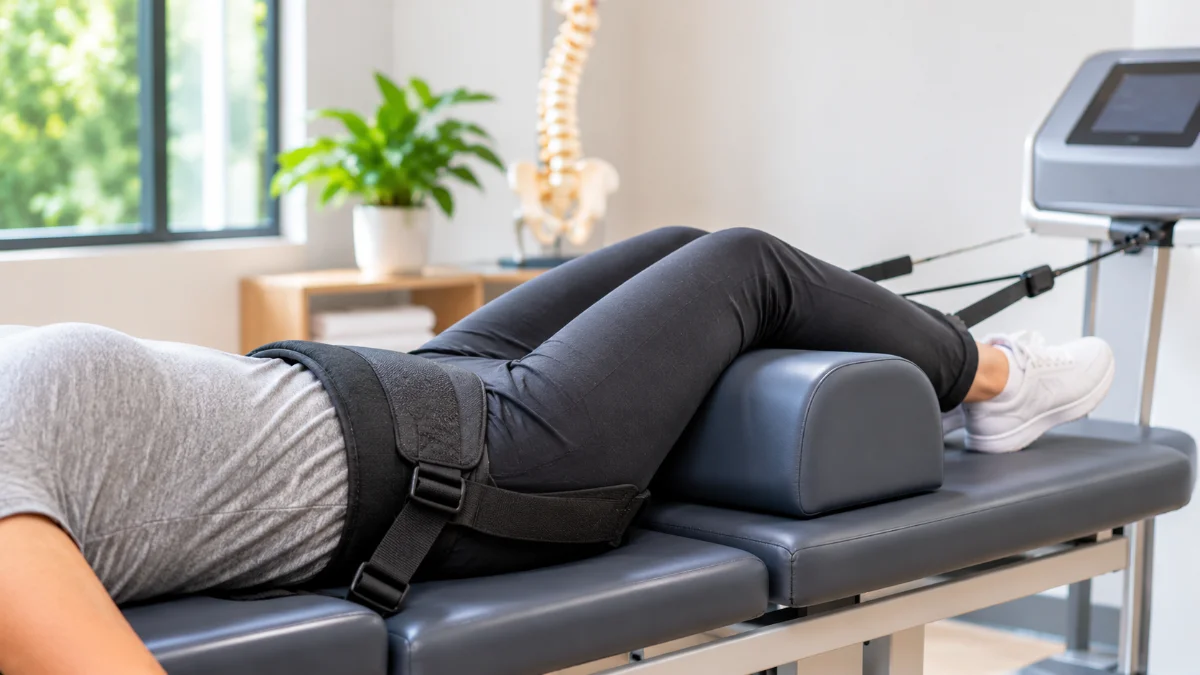
Nonsurgical spinal decompression uses a specialized treatment table to apply gentle, controlled stretching forces to the spine.
This therapy may be considered for patients experiencing disc-related sciatica, herniated discs, bulging discs, or persistent lower back discomfort.
Gentle Spinal Mobilization
Spinal mobilization involves slow, controlled movements that help improve joint mobility and reduce stiffness. It offers another hands-on approach that can be tailored to a patient’s comfort level.
Therapeutic Exercises
Personalized exercises may help strengthen the muscles supporting the lower back, hips, and pelvis. Improving flexibility, strength, and movement can support recovery and make everyday activities more comfortable.
Laser Therapy
Laser therapy is another noninvasive treatment that may be incorporated into a personalized care plan to help manage certain types of musculoskeletal discomfort.
Its suitability depends on the underlying condition, treatment goals, and individual patient needs.
Lifestyle and Posture Guidance
A chiropractor may recommend practical changes to your sitting habits, workstation setup, sleeping positions, and lifting techniques.
These recommendations can help you stay active and develop healthier movement habits that support long-term spinal function.
What Is Spinal Decompression?
Spinal decompression is a nonsurgical treatment that uses a specialized table to gently stretch the spine through controlled cycles of pulling and relaxation.
This technique is designed to temporarily reduce mechanical loading on spinal structures and may help relieve discomfort associated with certain disc-related conditions.
Nonsurgical spinal decompression may be considered for patients experiencing:
- Herniated discs
- Bulging discs
- Disc-related sciatica
- Persistent lower back pain
- Degenerative disc changes
- Radiating leg discomfort
Treatment settings and session frequency are determined according to your examination findings, symptoms, and individual needs.
Nonsurgical Spinal Decompression vs. Spinal Surgery
| Nonsurgical Spinal Decompression | Spinal Decompression Surgery |
| Noninvasive treatment | Surgical procedure |
| Uses a specialized treatment table | Uses surgical instruments and techniques |
| Does not require incisions | Typically requires an incision |
| Generally does not require anesthesia | Usually requires anesthesia |
| Typically involves minimal downtime | Requires a recovery period |
| May help manage selected disc-related symptoms | May directly relieve diagnosed nerve compression |
Nonsurgical spinal decompression offers another conservative treatment option for suitable patients exploring ways to manage spinal and disc-related discomfort.
Does Spinal Decompression Help Sciatica?
Spinal decompression may help manage sciatica symptoms, particularly in selected patients experiencing discomfort associated with herniated discs or other disc-related conditions.
The therapy applies controlled stretching forces to the spine, temporarily changing the mechanical load on spinal structures. For some patients, this may help reduce discomfort and improve movement.
Benefits of Spinal Decompression for Sciatica
| Potential Benefit | How It May Help |
| Reduced radiating leg pain | May help manage disc-related discomfort |
| Improved spinal mobility | Supports more comfortable movement |
| Reduced mechanical loading | Temporarily changes pressure on spinal structures |
| Improved physical function | May make everyday activities easier |
| Noninvasive treatment | Does not involve surgical incisions |
| Personalized treatment | Settings can be adjusted to individual needs |
| Support for rehabilitation | Can be incorporated into an active recovery plan |
At Simply Health Chiropractic, spinal decompression therapy can be considered as part of an individualized treatment plan focused on improving comfort, mobility, and physical function.
Does Spinal Decompression Work?
Some clinical studies suggest that mechanical traction and spinal decompression may provide short-term improvements in pain and physical function for selected patients with lumbar disc-related symptoms.
Spinal decompression can be incorporated into a comprehensive care plan alongside chiropractic care, appropriate exercises, and healthy movement habits.
The effectiveness of treatment depends on several factors, including the cause of sciatica, symptom severity, overall health, and individual response to care.
Research findings remain mixed, so proper patient selection and regular progress assessments are important.
The goal of treatment is to help patients manage discomfort, improve movement, and gradually return to their normal activities.
Is Spinal Decompression Safe?
Nonsurgical spinal decompression is a noninvasive treatment that may be suitable for patients who have undergone an appropriate clinical evaluation.
During therapy, controlled stretching forces are adjusted according to your condition, comfort level, and treatment needs.
What to Expect During Spinal Decompression Therapy
Your treatment may involve:
- Reviewing your medical history and symptoms.
- Evaluating spinal mobility and physical function.
- Positioning you comfortably on a specialized treatment table.
- Applying controlled cycles of stretching and relaxation.
- Monitoring your response and adjusting treatment when necessary.
Some patients may experience temporary soreness or mild discomfort following treatment.
People with recent spinal fractures, severe osteoporosis, spinal instability, spinal infections, or certain other medical conditions may require alternative treatment options. Pregnancy and previous spinal surgery also require special consideration.
A detailed evaluation helps your chiropractor determine whether spinal decompression is appropriate for your condition.
How to Relieve Sciatica Pain at Home
Simple lifestyle changes can complement professional care and help you manage sciatic nerve discomfort throughout the day.
Stay Physically Active
Gentle walking and regular movement can help maintain mobility and reduce stiffness. Start with activities that feel comfortable and gradually increase your activity as symptoms improve.
Use Heat or Cold Therapy
Cold packs may help manage discomfort during a painful flare-up, while gentle heat may help relax tight muscles.
Apply heat or cold for short periods with a towel protecting your skin. Avoid using them on areas with reduced sensation.
Take Regular Breaks From Sitting
Long periods of sitting may aggravate sciatica symptoms. Standing up, walking around, and changing positions throughout the day can help improve comfort.
Practice Gentle Stretching
Appropriate stretching exercises may improve flexibility and reduce muscle tension around the lower back and hips.
Choose movements that feel comfortable and avoid exercises that cause increasing pain down your leg.
Improve Your Lifting Technique
Bend through your hips and knees, keep objects close to your body, and avoid twisting while lifting heavy items.
Small adjustments to your daily movements can help manage unnecessary strain on your lower back.
Maintain a Healthy Lifestyle
Regular physical activity, balanced nutrition, sufficient sleep, and maintaining a healthy weight can support overall musculoskeletal health.
How to Sleep With Sciatica
Finding a comfortable sleeping position can help you rest better when experiencing sciatica. The goal is to support your lower back, hips, and legs while avoiding positions that increase discomfort.
| Sleeping Position | How to Improve Comfort |
| Side sleeping | Place a pillow between your knees to support your hips |
| Back sleeping | Place a pillow beneath your knees to support your lower back |
| Reclined sleeping | Support your back and legs in a comfortable, elevated position |
| Stomach sleeping | Place a thin pillow beneath your pelvis if this position feels comfortable |
Tips for Sleeping Better With Sciatica
- Use a comfortable and supportive mattress.
- Choose pillows that support your natural sleeping position.
- Practice gentle movement before bedtime.
- Avoid sudden twisting when getting into or out of bed.
- Experiment with positions that reduce leg discomfort.
- Maintain a consistent sleeping routine.
There is no single sleeping position that works for everyone. Choose the position that provides the greatest comfort and allows you to rest naturally.
How Long Does Sciatica Last?
Many people with sciatica experience noticeable improvement within four to six weeks, although recovery may take longer depending on the underlying condition and severity of symptoms.
Appropriate treatment, regular movement, and healthy daily habits can help support the recovery process.
| Type of Sciatica | General Duration |
| Acute sciatica | Less than six weeks |
| Subacute sciatica | Six to twelve weeks |
| Chronic sciatica | More than twelve weeks |
These categories describe how long symptoms have been present rather than predict an exact recovery timeline.
Signs That Your Sciatica Is Improving
You may notice several positive changes as your condition improves:
- Less pain traveling down your leg.
- Reduced tingling and discomfort.
- Improved lower back mobility.
- Greater comfort while sitting.
- Improved walking and standing ability.
- Better sleep quality.
- Increased confidence during everyday activities.
A personalized care plan can help you monitor your progress and gradually return to the activities you enjoy.
What Kind of Doctor Treats Sciatica?
Several healthcare professionals can evaluate and treat sciatica. The most appropriate provider depends on your symptoms, underlying condition, and individual treatment needs.
| Healthcare Professional | How They Can Help |
| Chiropractor | Provides spinal evaluations and appropriate conservative chiropractic care |
| Primary care physician | Performs medical evaluations and coordinates treatment |
| Physical therapist | Provides exercise-based rehabilitation and movement guidance |
| Neurologist | Evaluates complex nerve-related symptoms |
| Pain management specialist | Offers specialized options for persistent pain |
| Orthopedic spine surgeon | Evaluates spinal conditions that may require surgical treatment |
| Neurosurgeon | Assesses significant nerve compression and related conditions |
Should You See a Chiropractor for Sciatica?
A chiropractor may be a suitable starting point for people experiencing uncomplicated lower back pain, radiating leg discomfort, spinal stiffness, or disc-related symptoms.
Chiropractic care offers a nonsurgical approach focused on improving movement, managing discomfort, and supporting physical function.
When specialized medical treatment is needed, your chiropractor can recommend an appropriate referral to another healthcare professional.
When Should You Seek Medical Attention for Sciatica?
Receiving an evaluation early can help you better understand your symptoms and explore appropriate treatment options.
Consider scheduling a professional evaluation if your sciatica continues for several weeks, frequently returns, or interferes with walking, sleeping, working, or other everyday activities.
Seek immediate emergency medical attention if you experience:
- Sudden loss of bladder or bowel control.
- Difficulty urinating or an inability to urinate.
- Numbness around the groin, genitals, or inner thighs.
- Severe or rapidly worsening leg weakness.
- Severe or worsening neurological symptoms affecting both legs.
These symptoms may indicate significant nerve compression that requires immediate medical treatment.
New foot weakness, fever accompanied by back pain, unexplained weight loss, or pain following a major injury also requires prompt medical evaluation.
How to Prevent Sciatica From Returning
While sciatica cannot always be prevented, developing healthy lifestyle and movement habits can support spinal health and reduce the impact of recurring symptoms.
Consider incorporating these habits into your daily routine:
- Stay active through regular walking and exercise.
- Strengthen your back, abdominal, and hip muscles.
- Take regular breaks during prolonged sitting.
- Maintain a healthy body weight.
- Practice comfortable lifting techniques.
- Create a supportive and comfortable workstation.
- Gradually increase the intensity of physical activities.
- Follow personalized rehabilitation recommendations.
- Address recurring lower back and leg discomfort early.
Consistency with healthy movement habits can help improve physical function and support long-term spinal wellness.
Chiropractic Care for Sciatica in Spring Green, WI
Sciatic nerve pain doesn’t have to define your everyday life. With appropriate care and personalized treatment, many people can take meaningful steps toward improved comfort, mobility, and physical function.
At Simply Health Chiropractic in Spring Green, WI, Dr. Rebecca Weidner provides individualized chiropractic care for patients experiencing sciatica, lower back pain, herniated discs, joint discomfort, and other musculoskeletal conditions.
With more than a decade of patient care experience, Dr. Weidner focuses on understanding each patient’s symptoms, identifying contributing factors, and developing a treatment plan that aligns with their health and recovery goals.
Our Services in Spring Green, WI
- Chiropractic Care
- Cold Laser Therapy
- Spinal Decompression Therapy
- Pediatric Chiropractic
- Pregnancy Chiropractic Care
- Wellness Care
- Injury Care
- Spinal Screenings
- X-Rays
Whether you’re experiencing a recent episode of sciatica or managing recurring disc-related discomfort, Simply Health Chiropractic offers conservative treatment options focused on helping you move more comfortably.
Dr. Rebecca Weidner serves individuals and families throughout Spring Green and the greater River Valley community, helping patients stay active and continue doing the things that matter most to them.
Schedule an appointment with Dr. Rebecca Weidner to explore personalized chiropractic care and spinal decompression therapy for sciatica in Spring Green, WI.
Location: Spring Green, WI
Website: Chiropractor in Spring Green, WI
Phone: +1 608-588-0333
Map: Simply Health Chiropractic – Spring Green, WI
Conclusion
Sciatica can make walking, sitting, sleeping, and other everyday activities challenging. Fortunately, many people experience meaningful improvements with appropriate conservative care and healthy movement habits.
So, can a chiropractor help with sciatica? Chiropractic care offers a nonsurgical approach that may help manage sciatic nerve pain, improve spinal mobility, and support better physical function.
Chiropractic adjustments, spinal decompression therapy, therapeutic exercises, and personalized lifestyle recommendations can form part of a comprehensive care plan based on your individual needs.
At Simply Health Chiropractic in Spring Green, WI, Dr. Rebecca Weidner is dedicated to helping patients understand their symptoms, explore suitable treatment options, and work toward a more comfortable and active lifestyle.
Take the first step toward managing sciatic nerve pain. Contact Simply Health Chiropractic today to schedule your personalized chiropractic evaluation.
Frequently Asked Questions
What is the fastest way to relieve sciatica pain?
Gentle walking, comfortable sleeping positions, heat or cold therapy, and appropriate professional care may help reduce sciatica discomfort. The most effective approach depends on the underlying cause of nerve irritation and the severity of your symptoms.
What are the main causes of sciatica?
Common causes of sciatica include herniated discs, bulging discs, lumbar spinal stenosis, degenerative disc changes, and spondylolisthesis. These conditions may irritate or compress nerve roots in the lower spine.
How do I know if my pain is sciatica?
Sciatica typically causes sharp, burning, or shooting pain that travels from the lower back or buttock down one leg. Tingling, numbness, and muscle weakness may also occur. A professional physical examination can help determine whether your symptoms are related to sciatic nerve irritation.
What should you not do with sciatica?
Avoid prolonged bed rest, extended sitting, aggressive stretching, and heavy lifting that increases your symptoms. Staying gently active and choosing comfortable movements can help support recovery.
Can a chiropractor help relieve sciatica pain?
Yes, chiropractic care may help suitable patients manage sciatic nerve pain through spinal adjustments, gentle mobilization, therapeutic exercises, and lifestyle guidance. Spinal decompression may also be considered for selected patients with disc-related symptoms.
Can spinal decompression make sciatica worse?
Some patients may experience temporary soreness or increased discomfort following spinal decompression. A thorough evaluation, appropriate treatment settings, and regular progress monitoring help determine whether therapy is suitable. Worsening nerve symptoms should be reassessed before continuing treatment.
About the Author
Dr. Rebecca Weidner, D.C.
Dr. Rebecca Weidner is the owner and chiropractor at Simply Health Chiropractic in Spring Green, Wisconsin. With more than a decade of patient care experience, she is passionate about helping individuals and families improve mobility, manage discomfort, and maintain an active lifestyle.
She works with patients experiencing back pain, neck pain, headaches, joint discomfort, injuries, herniated discs, and other musculoskeletal conditions.
Dr. Weidner has a special interest in nonsurgical spinal decompression therapy and helping patients manage persistent disc-related discomfort and radiating pain.
Her patient-centered approach emphasizes thorough evaluations, clear communication, personalized treatment plans, and long-term spinal wellness. She is committed to helping patients throughout Spring Green and the greater River Valley community continue enjoying their everyday activities.